Choosing reliable Protein Powder suppliers requires more than comparing prices on a polished website. Global buyers must examine product quality, manufacturing experience, documentation, and supply consistency. A supplier may offer attractive bulk rates, yet weak traceability can create serious purchasing risks. Small details matter, including sealed packaging, batch numbers, storage conditions, and clear ingredient labels.
This guide introduces leading Protein Powder suppliers for international buyers and explains what separates dependable partners from temporary sellers. It considers whey, plant-based, casein, and blended formulas. It also reviews third-party testing, allergen controls, certifications, minimum order quantities, lead times, and private-label support. Experienced suppliers should provide recent test reports and explain how each batch is verified. Their answers should be specific, not vague marketing language.
No supplier looks perfect on paper. That matters.
A strong evaluation also considers communication during delays, shipping documentation, and responsiveness after payment. Buyers should confirm whether certificates match the actual manufacturing site. They should request samples before committing to large volumes. Regional regulations can differ, so professional advice may still be necessary before importing or selling products. This overview is designed to support careful decisions, not replace independent due diligence. Some supplier information changes quickly, and published claims may require fresh verification. Reliable partnerships grow through evidence, consistent performance, and honest discussion of limitations.
A reliable global protein powder supplier proves quality through consistent evidence, not polished promises. Buyers should request a current certificate of analysis for each production lot. It should show protein content, amino acid results, microbiological limits, heavy metal testing, and allergen information. The document must match the batch number on the packaging. Small details matter.
Experience also means understanding production controls. A dependable supplier can explain raw material sourcing, processing temperatures, storage conditions, and traceability procedures. They should provide clear specifications and respond accurately to technical questions. Independent laboratory testing adds confidence, especially when importing across different markets. However, a certificate alone is not enough. A perfect document may still hide weak communication or unstable supply. That deserves reflection.
Tips: Request a sample before placing a large order. Compare its flavor, solubility, texture, and packaging condition. Ask how complaints are investigated and how corrective actions are recorded. Confirm production capacity, minimum order quantities, lead times, and shipping documents in writing. Check whether the facility follows recognized food safety systems and permits reasonable audits. Reliable suppliers do not avoid difficult questions. They explain limitations, admit occasional mistakes, and show how problems are fixed. That honesty is often more valuable than impressive sales language.
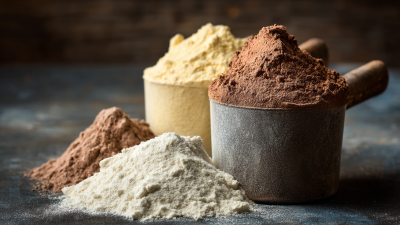
Global buyers should compare protein powders by function, not only by protein percentage. Whey concentrate suits cost-sensitive formulas and offers a creamy taste. Whey isolate provides higher protein with less lactose. Casein digests more slowly and works well in evening products. Plant proteins, such as pea, rice, or blended formulas, require careful taste and texture checks. A blend may improve amino acid balance, but it can also create a gritty mouthfeel.
Certifications deserve the same attention as nutrition panels. Ask suppliers for current GMP, HACCP, or ISO 22000 documentation. These systems show how production risks are controlled. Independent testing should confirm protein content, microbiological safety, heavy metals, allergens, and banned-substance screening when relevant. Request a batch-specific certificate of analysis, not a general template. Packaging details matter too. Check seal quality, lot coding, storage temperature, and shelf-life evidence. A high protein number can still hide poor solubility or unstable flavor.
Tips:
Compare three samples using the same water volume and shaker time. Record clumping, sweetness, aftertaste, and sediment. Verify each certificate with the issuing organization when possible. Do not assume one certification covers every destination market. Requirements differ. My own review would also include a small production trial, because laboratory samples can look better than commercial batches. That gap is easy to underestimate.
For global protein powder buyers, supplier quality starts with verifiable evidence, not polished brochures. The WHO estimates that contaminated food causes 600 million illnesses and 420,000 deaths annually worldwide. That figure makes food safety checks a commercial responsibility, not paperwork.
Request current certificates for HACCP, ISO 22000, FSSC 22000, or dietary supplement cGMP compliance. Then verify the certificate number with the issuing body. Ask for recent batch records, allergen controls, sanitation logs, and product specifications. Trace every lot. A complete certificate can still hide weak daily practices.
Independent testing should confirm protein content, amino acid identity, microbiological safety, moisture, heavy metals, and undeclared allergens. Compare the certificate of analysis with a sealed production sample. Do not rely on one test. The AOAC International Official Methods program supports validated analytical methods, but laboratories may still differ in equipment and sampling quality. That gap deserves attention.
Ask how suppliers manage deviations, recalls, temperature control, and raw-material traceability. Review their last audit findings, including unresolved observations. Visit the facility when order volume justifies it. Look at cleaning corners, warehouse labels, and employee hygiene. Small details matter. Supplier evaluation is never perfect, and I would document every assumption before approving a long-term contract. (WHO, Estimates of the Global Burden of Foodborne Diseases, 2015; AOAC International Official Methods of Analysis)
Typical minimum protein specifications by ingredient category: whey concentrate commonly contains about 80% protein, whey isolate about 90%, and plant-based protein blends commonly range from 70% to 80%. Buyers should verify the exact specification through an independent certificate of analysis, microbiological testing, allergen controls, and applicable food-safety certifications.
Top Protein Powder Suppliers for Global Buyers?
Global buyers should compare more than the quoted price. Ask suppliers for a clear price sheet, including product cost, testing fees, packaging, inland transport, and export charges. Confirm the trade term, minimum order quantity, payment schedule, and quotation validity. A low offer can hide expensive adjustments later. Request recent certificates of analysis and independent test reports for protein content, microbiological safety, heavy metals, and allergens.
Packaging deserves equal attention. Check whether bags, pouches, or tubs protect powder from humidity during long transit. Food-grade materials, strong seals, batch codes, ingredient lists, and destination-market labels should be confirmed before production. Ask for a physical sample, not only digital artwork. Small details matter. A weak zipper can ruin an otherwise reliable shipment. Suppliers should explain their filling process and provide packaging specifications in writing.
Logistics can change the real purchase cost. Confirm production lead time, port of loading, pallet dimensions, container capacity, and document requirements. Check whether the supplier has handled your destination before. Customs delays may result from incomplete invoices or inconsistent product descriptions. Build a reasonable buffer into the delivery plan. Even experienced buyers sometimes trust optimistic dates too quickly. I would also compare landed cost, not just factory pricing, because freight, duties, storage, and inspection fees can reshape the final margin.
Top Protein Powder Suppliers for Global Buyers?
How Can Buyers Verify Samples, Contracts, and Long-Term Supply Terms?
A reliable sample review begins with traceability. Ask for the batch number, production date, ingredient specification, and certificate of analysis. Compare the powder’s color, aroma, solubility, and texture with the written specification. Keep sealed samples from different lots. A single attractive sample proves very little.
Use an independent laboratory when the purchase value is significant. Test protein content, moisture, microbiological limits, heavy metals, and undeclared additives where relevant. Confirm that the laboratory uses validated methods and can identify the tested lot. Supplier documents support decisions, but they should not replace verification. This step can feel slow. It often prevents expensive disputes.
The contract should define protein percentage, testing standards, packaging, shelf life, delivery terms, and rejection procedures. Include a written notice period for formula, facility, or raw material changes. Clarify minimum order quantities, lead times, forecast flexibility, payment stages, and remedies for delayed shipments. For long-term supply, request production capacity evidence and periodic quality reviews. A factory audit can reveal practical weaknesses, such as poor moisture control or unclear storage records. No checklist is perfect. Buyers should revisit it after the first shipment, because actual performance may differ from the sales discussion. Keep every approval, test report, email, and corrective action linked to the relevant lot. That record strengthens accountability and improves future purchasing decisions.
| Evaluation Stage | Data Dimension | Recommended Buyer Check | Practical Acceptance Benchmark | Required Evidence | Risk Level |
|---|---|---|---|---|---|
| Supplier Qualification | Manufacturing-site compliance | Confirm the production site, legal entity, food-safety system, audit scope, and certificate validity. | Certificate covers the actual production site and relevant product category; certificate is current and independently verifiable. | Valid food-safety certificate, audit report or summary, site address, and corrective-action records where applicable. | Medium |
| Supplier Qualification | Traceability and recall capability | Ask the supplier to demonstrate one-step-back and one-step-forward traceability using a production lot. | Lot records identify raw-material lots, processing date, finished-goods lot, packaging, and shipment destination. | Mock-recall record, lot-code format, batch record sample, and documented recall procedure. | Low |
| Sample Verification | Identity and protein content | Send a sealed sample to an independent laboratory and compare the result with the supplier’s specification. | Protein result meets the agreed specification; testing method is stated because nitrogen-based methods may overestimate protein in some formulations. | Independent certificate of analysis, sampling record, test method, and chain-of-custody documentation. | High |
| Sample Verification | Microbiological safety | Test total plate count, yeast and mold, indicator organisms, and pathogens according to the destination market. | Results comply with the destination-country legal requirements and the agreed product specification; pathogen limits must be defined before ordering. | Accredited-laboratory report, sample lot number, test date, method reference, and laboratory accreditation details. | High |
| Sample Verification | Contaminants and adulteration | Assess heavy metals, pesticide residues where relevant, allergens, undeclared ingredients, and economically motivated adulteration. | All results comply with applicable legal limits and the buyer’s restricted-substance list; allergen status is documented. | Contaminant panel, allergen declaration, raw-material origin records, and risk-based authenticity testing. | High |
| Sample Verification | Sensory and physical performance | Evaluate taste, odor, color, solubility, dispersibility, sedimentation, bulk density, and packaging condition. | Sample matches the approved golden sample within agreed tolerances and remains stable under normal preparation conditions. | Signed sample-approval form, sensory scorecard, product specification, and storage-condition record. | Medium |
| Contract Review | Product specification and change control | Attach a controlled specification covering ingredients, nutrition, allergens, microbiology, contaminants, packaging, and shelf life. | No material change to formulation, raw-material source, process, site, or packaging without prior written approval. | Signed specification, change-notification clause, approval workflow, and revision-control history. | High |
| Contract Review | COA and lot-release requirements | Define which tests are required for every lot and which may be performed periodically based on risk. | Every shipment includes a lot-specific COA linked to the shipped lot; critical results are available before release. | COA template, release procedure, test-frequency matrix, and nonconforming-product procedure. | High |
| Contract Review | Incoterms, payment, and title transfer | State the delivery term, named place, insurance responsibility, payment milestones, inspection rights, and transfer of risk. | Contract uses a current Incoterms rule and clearly assigns freight, customs, insurance, delay, and damage responsibilities. | Signed sales contract, pro forma invoice, shipping documents, and customs responsibility matrix. | Medium |
| Long-Term Supply | Minimum order quantity and lead time | Compare normal lead time, peak-season lead time, production slot reservation, and minimum order quantity. | Lead-time commitments are expressed in business days from approved purchase order and artwork/specification confirmation. | Capacity statement, historical delivery performance, production calendar, and agreed service-level terms. | Medium |
| Long-Term Supply | Price-adjustment mechanism | Define which cost drivers may change, the evidence required, the notice period, and the buyer’s right to reject an adjustment. | Adjustments are formula-based or evidence-based, not discretionary, and cannot be applied retroactively without written agreement. | Pricing schedule, adjustment formula, supporting-index requirement, notice period, and termination option. | Medium |
| Long-Term Supply | Safety stock and continuity planning | Ask how the supplier manages raw-material shortages, transport disruption, equipment failure, and regulatory changes. | Documented business-continuity plan, escalation contacts, alternative qualified materials, and agreed allocation rules. | Business-continuity plan, emergency communication procedure, safety-stock policy, and disaster-recovery test record. | High |
| Long-Term Supply | Shelf life and storage stability | Verify the shelf-life period, storage temperature and humidity requirements, packaging barrier properties, and retest policy. | Shelf life is supported by stability data under defined conditions and is printed consistently on each lot. | Stability summary, packaging specification, storage instructions, retained-sample program, and date-coding procedure. | Medium |
| Ongoing Performance | Key supplier-performance indicators | Review delivery, quality, documentation, complaint, and corrective-action performance at an agreed frequency. | Use measurable targets such as on-time-in-full delivery, lot acceptance rate, COA accuracy, complaint closure time, and corrective-action closure. | Quarterly scorecard, nonconformance log, complaint trend, corrective-action reports, and periodic supplier review minutes. | Low |