China Top Organic Soy Protein Powder Suppliers?
China’s organic soy protein powder sector is gaining attention as food manufacturers seek traceable, plant-based nutrition ingredients. FiBL and IFOAM Organics International reported 96.4 million hectares of organic farmland worldwide in 2022. That figure signals steady demand, but it does not prove every supplier offers certified organic protein.
The USDA Foreign Agricultural Service’s Oilseeds: World Markets and Trade report for 2024/25 places global soybean production above 420 million metric tons. China remains a major soybean processor and importer. This creates strong manufacturing capacity. It also creates a verification challenge. Supply volume alone is not quality evidence.
This guide examines China’s top Organic Soy Protein Powder suppliers through practical purchasing criteria. These include organic certification, soybean origin, extraction methods, protein concentration, allergen controls, heavy-metal testing, and batch traceability. Certifications may include China Organic, USDA NOP, EU Organic, ISO 22000, and HACCP. Buyers should request current certificates, laboratory reports, and production-audit records.
Real experience matters here. A polished website cannot replace a retained sample. Nor can a low quotation confirm reliable quality. Some suppliers may describe products as “natural” without meeting organic standards. That distinction deserves careful review.
The analysis also considers private-label capability, minimum order quantities, packaging options, lead times, and export documentation. Supplier rankings are not permanent. Certifications expire, factories change, and test results can vary between batches. This guide therefore treats supplier selection as an ongoing quality process, not a one-time decision.
What Is Organic Soy Protein Powder?
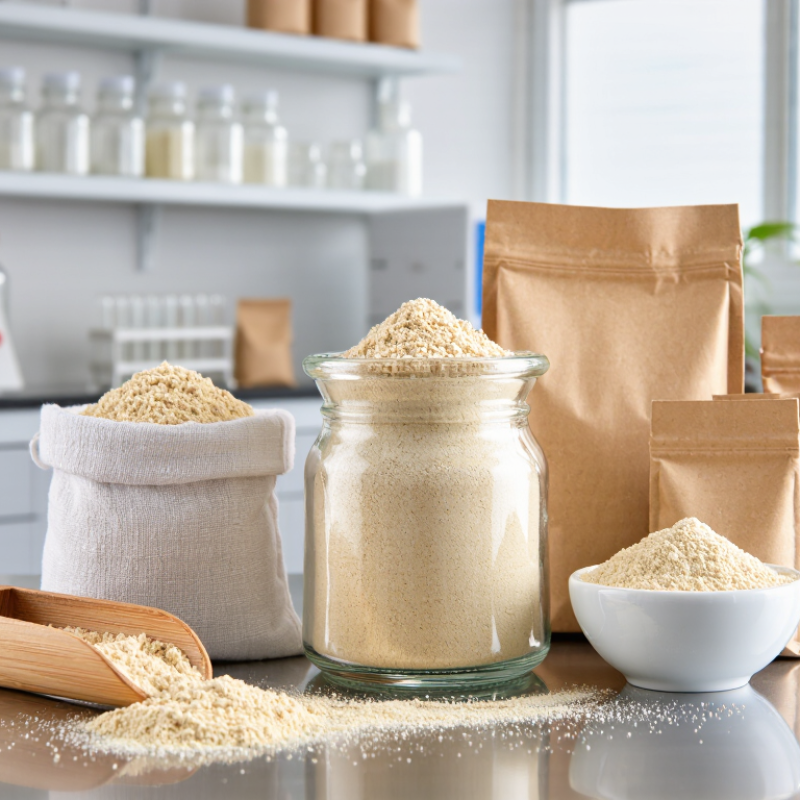
Organic soy protein powder is a plant-based ingredient made from soybeans grown under certified organic farming standards. Manufacturers clean, grind, and process the beans to concentrate their protein. The result is usually a pale powder with a mild, earthy taste. It can be mixed into smoothies, oatmeal, bakery recipes, or sports nutrition products.
Organic does not mean nutritionally perfect. The powder may provide all essential amino acids, but its texture and flavor can vary between suppliers. Processing methods also affect solubility and protein concentration. In my experience, a powder that looks fine may still form lumps in cold water. That detail matters during product testing. Reliable suppliers should provide organic certificates, allergen statements, country-of-origin information, and recent laboratory results. Buyers should check protein content, moisture, microbiological safety, and heavy metal testing. Certification rules differ by market, so paperwork deserves careful review.
Tips: Request a small sample before placing a large order. Compare the powder’s color, smell, dispersibility, and taste. Ask how suppliers protect the powder from moisture during storage and transport. A low price can be useful, but it may hide weaker documentation or inconsistent batches. I would not judge quality from marketing language alone. Practical testing remains necessary.
What Is Organic Soy Protein Powder?
Organic soy protein powder is made from soybeans grown under certified organic farming standards and processed into a concentrated protein ingredient. A typical soy protein isolate provides approximately 88.3 g of protein per 100 g, with relatively small amounts of carbohydrates and fat. Organic certification describes how the soybeans are produced; it does not automatically guarantee a different macronutrient profile.
Reference: USDA FoodData Central, soy protein isolate, dry basis. Values are approximate and may vary by processing method and product specification.
How to Evaluate Chinese Organic Soy Protein Suppliers
China Top Organic Soy Protein Powder Suppliers? How to Evaluate Chinese Organic Soy Protein Suppliers
A credible supplier should prove organic status beyond a certificate image. FiBL and IFOAM reported global organic retail sales of approximately
€135 billion in 2022. That growth increases documentation risks. Request the certificate number, issuing body, validity dates, covered facility, and certified product scope. Verify them through the official certification database when possible. Chinese organic certification should match your destination market’s rules. Domestic approval alone may not satisfy European or United States requirements.
Study the supply chain closely. The USDA Foreign Agricultural Service reported that China imports
more than 100 million metric tons of soybeans annually. Large volumes do not prove organic origin. Ask whether beans are segregated from conventional stock during unloading, storage, milling, and drying.
A reliable factory should provide lot codes, farm or collector records, production dates, and sealed-bag traceability. Request recent tests for pesticide residues, heavy metals, microbiological safety, protein content, moisture, and amino acid consistency. Check whether an independent laboratory performed the tests.
Visit the plant, or arrange a qualified third-party audit. Observe cleaning schedules, allergen controls, warehouse labels, and sampling practices. Ask for a retained sample from the same lot.
I would not trust unusually perfect paperwork. My checklist has blind spots too, especially when subcontracted processing is hidden.
Confirm every processing site in writing, then compare certificate scope with the actual factory address. Price matters, but unexplained discounts deserve investigation.
Leading Supplier Types and Production Capabilities in China
China’s organic soy protein powder suppliers usually fall into three groups: integrated processors, contract manufacturers, and trading exporters. Integrated processors control cleaning, dehulling, defatting, extraction, drying, and packing. This structure often improves traceability and batch consistency. Contract manufacturers offer flexible volumes and custom protein levels. Trading exporters may provide wider product choices, but their factory visibility can be limited.
Production capability matters more than a polished catalogue.
The FiBL and IFOAM World of Organic Agriculture 2024 report recorded 96.4 million hectares of organic farmland globally in 2022. This growth increases demand for documented organic raw materials. Chinese suppliers should therefore show current organic certificates, soybean origin records, allergen controls, and test reports for protein, moisture, microbes, and contaminants. Some facilities can produce soy protein concentrate, isolate, and instantized powder. Not every factory can handle all three well.
Look closely at drying technology, because heat can affect solubility and flavour. A capable plant should explain spray-drying conditions, sieve size, packaging barriers, and storage humidity. China’s soybean supply base is also substantial; USDA Foreign Agricultural Service data projected China’s soybean imports at about 105 million metric tons for 2024/25. Yet imported soybeans do not automatically equal organic soybeans. That distinction is easy to miss.
My practical caution is simple: request recent batch records, not only certificates. A supplier may pass an audit and still show uneven dispersibility between lots. Small pilot trials remain necessary.
Sourcing, Pricing, Packaging, and Export Considerations
China Top Organic Soy Protein Powder Suppliers?
China remains a significant processing base for soy ingredients, but supplier selection needs evidence. The FiBL and IFOAM World of Organic Agriculture 2024 report recorded global organic food sales of about €135 billion in 2022. This supports demand, yet organic claims require valid certificates, traceability, and annual verification. Request farm-origin records, processing-flow charts, recent certificates, and batch-specific certificates of analysis. Test protein content, moisture, amino acids, heavy metals, allergens, and pesticide residues through an independent laboratory.
Pricing usually depends on protein level, organic status, order volume, and delivery terms. A low quotation may hide weaker testing or unstable raw materials. Compare at least three offers using the same specification. Ask whether prices include packaging, inspection, inland transport, and export documentation. The USDA Foreign Agricultural Service regularly shows soybean prices changing with harvest forecasts, freight, and currency movements. Therefore, fixed annual pricing may be unrealistic.
Packaging should protect powder from humidity and oxygen. Common export formats include 20–25 kilogram multiwall bags with food-grade liners, while smaller retail packs need stronger barrier films. Check seal strength, pallet wrapping, lot coding, and shelf-life testing. For export, verify destination-country organic rules, food-contact requirements, labeling language, allergen declarations, and permitted claims. The European Commission requires food-contact materials to meet safety rules under Regulation (EC) No 1935/2004. I would also request a pre-shipment sample. One weakness remains: supplier documents can look complete while factory controls vary between batches.