10 Best Soy Protein Suppliers for Global Buyers
Soy Protein has moved from a niche ingredient to a strategic sourcing category. USDA’s Oilseeds: World Markets and Trade report estimates global soybean production at roughly 425 million metric tons for 2024/25. This enormous supply base supports food, beverage, nutrition, and industrial applications worldwide. However, volume alone does not guarantee dependable protein quality.
MarketsandMarkets projects continued growth in the global soy protein market, driven by sports nutrition, meat alternatives, and affordable dietary protein. Dr. Mark Messina, Executive Director of the Soy Nutrition Institute Global, has stated, “Soy protein is a high-quality protein.” His comment reflects a key purchasing issue: buyers need more than competitive prices. They need verified amino acid profiles, stable functionality, traceable sourcing, and consistent documentation.
That is where supplier selection becomes difficult. Origin matters. Processing matters more. A bright powder in a sample bag may perform poorly in a commercial beverage or textured product. Buyers should examine protein concentration, solubility, flavor control, allergen management, certifications, and delivery capacity. No supplier is perfect.
This guide, “10 Best Soy Protein Suppliers for Global Buyers,” introduces companies that serve international procurement needs. It considers manufacturing scale, technical support, quality systems, export experience, and product versatility. The ranking should not replace independent audits or pilot testing. Suppliers change, and published claims can age quickly. Careful buyers will compare certificates, request recent samples, and test performance under real production conditions.
Soy Protein: Types, Uses, and Global Market Demand
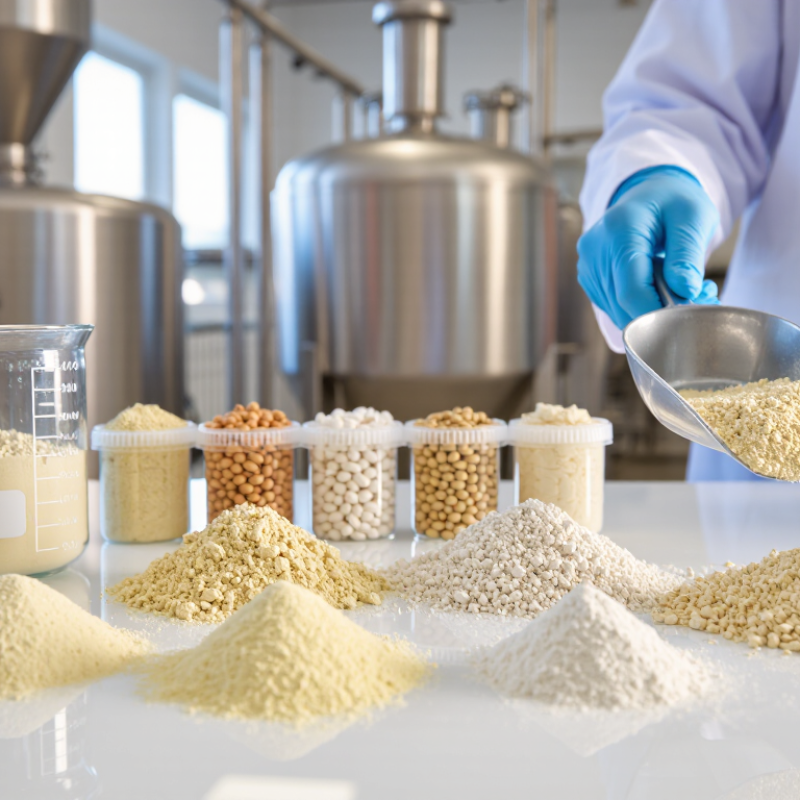
Soy protein comes in several forms, each suited to different food applications.
Soy protein concentrate retains more of the bean’s natural components, while isolate offers a higher protein concentration and a smoother, more neutral base. Textured soy protein is designed to absorb water and create a firm, meat-like bite. It can look surprisingly close.
Manufacturers use these ingredients in plant-based foods, nutrition products, bakery mixes, beverages, and meat alternatives. In a test kitchen, texture often decides whether a product succeeds: a dry sample may need more water, while an overly fine powder can make a drink feel chalky. Processing method, particle size, and flavor all matter. Not just protein content.
Demand is shaped by interest in plant-based diets, affordable protein, and flexible food manufacturing. Yet global buyers face an uneven market. Crop conditions, freight costs, and local processing capacity can affect availability and price. Buyers should compare protein specifications, functionality, and documentation, then test samples in the intended recipe. A supplier’s stated protein level alone cannot predict performance. That is easy to overlook. Regional labeling rules and consumer expectations also vary, so one formulation may not suit every market. Even careful testing leaves some uncertainty.
Key Criteria for Selecting Reliable Soy Protein Suppliers
10 Best Soy Protein Suppliers for Global Buyers
Key Criteria for Selecting Reliable Soy Protein Suppliers
Choosing among the ten best soy protein suppliers requires more than comparing prices. A reliable supplier should provide a recent certificate of analysis for every batch. Check protein content, moisture, microbiological limits, heavy metals, and allergen controls. Results should match recognized laboratory methods.
Traceability matters. Ask where the soybeans are grown, how lots are separated, and how records are stored. Clear GMO status and pesticide documentation also support safer purchasing decisions. Third-party certifications may strengthen confidence, but buyers should verify certificate numbers and expiry dates themselves.
Do not ignore production consistency. Request samples from different batches, then compare color, odor, solubility, and performance in your actual formula. A powder that mixes well in water may behave differently in bakery or sports nutrition products. Small trials reveal this quickly.
Ask about minimum order quantities, lead times, packaging, shipping conditions, and backup inventory. Export documents must be accurate and suitable for the destination market. Technical support is useful when viscosity or flavor changes occur. Still, support cannot replace evidence.
I have seen buyers focus too heavily on a low quotation. That choice can create hidden costs through delays, reformulation, or rejected shipments. My own evaluation process is not perfect; sensory judgments can vary between testers. A written scoring sheet and retained samples make decisions more reliable. Audits, transparent communication, and prompt responses often distinguish dependable suppliers from merely attractive offers.
10 Best Soy Protein Suppliers for Global Buyers
Key Criteria for Selecting Reliable Soy Protein Suppliers
This buyer evaluation framework assigns a 100-point weighting to the factors most commonly used when comparing soy protein suppliers: consistent product quality, regulatory compliance, supply reliability, traceability, technical support, and commercial terms. Buyers can apply the same criteria to evaluate suppliers anonymously across different markets.
Profiles of the 10 Best Soy Protein Suppliers Worldwide
These ten supplier profiles represent capability types, not a ranked brand list. Sourcing fit depends on application, origin, and verification. USDA’s Oilseeds: World Markets and Trade (May 2025) estimated 2024/25 global soybean production at about 421 million tonnes. Large harvests do not guarantee consistent protein functionality.
The profiles cover commodity meal processors, soy-protein isolate specialists, concentrate makers, and texturizing-protein producers. They also include lecithin-linked ingredient suppliers, organic-focused processors, identity-preserved non-GMO exporters, regional Asian manufacturers, export-oriented plants, and vertically integrated groups. These are capability profiles, not endorsements. Check protein on a dry basis, mesh size, dispersibility, flavor, and batch variation. Ask for recent certificates of analysis and origin-level traceability.
The OECD-FAO Agricultural Outlook 2024-2033 projects continued growth in global oilseed-meal use, with feed demand a major driver. That is useful context, but meal demand does not prove food-grade protein availability. Confirm lead times, minimum order quantities, and allergen controls directly. Bench-test each lot in the actual recipe. Minor differences can matter.
Global Sourcing Factors: Pricing, Logistics, and Buyer Support
For global buyers, a soy protein quote is only the starting point. Compare prices by protein content, moisture, packaging, and delivery terms; otherwise, two offers may not be comparable. The USDA’s June 2025 Oilseeds: World Markets and Trade report estimated 2024/25 global soybean production at about 420.9 million metric tons. That scale supports broad sourcing, but it does not guarantee steady availability of processed protein. Ask suppliers to explain how they manage raw-material changes and quote validity. Small details matter.
Logistics can change the real cost. Request a landed-cost breakdown covering inland transport, ocean freight, insurance, and port handling. Check typical lead times, shipment-size flexibility, and backup routing. The World Bank’s 2023 Logistics Performance Index evaluates customs, infrastructure, shipment arrangements, logistics quality, tracking, and timeliness. Use those categories to frame supplier questions, not as a substitute for checking a specific route. A delayed sample shipment is a warning worth investigating.
Buyer support also deserves a place in the comparison. Ask for current product specifications, batch-level test documents, and a clear process for handling discrepancies. Confirm who answers technical questions and how quickly. A low quote can still become expensive. I have seen sourcing plans overlook the cost of unclear paperwork; that is easy to miss, and worth reflecting on before placing a large order.